

It’s February, and United States officials have warned that a government in the Middle East has dangerous weapons that could threaten American allies. Intelligence reports suggest the risk could grow if the United States waits too long to act. This drives leaders to argue that military action might be necessary to prevent a larger threat in the future.
Those warnings may sound like the rationale for the U.S. launching airstrikes on Iran on Feb. 28, 2026. But they were not about Iran. They were made in 2003 about Iraq, just before the United States launched an invasion that would become one of the most consequential foreign policy decisions in modern American history.
At the time, the war had overwhelming public support. In March 2003, about 72% of Americans supported the invasion of Iraq, according to a poll by Gallup, which was conducted as U.S. forces prepared to enter the country. This was the political climate following the Sept. 11 attacks, where al-Queda, led by Osama Bin Laden, used 19 terrorists to hijack four commercial airplanes and crash them into the World Trade Center in New York City and the Pentagon in Washington D.C. In total 2,977 people were killed. Many Americans accepted the government’s warnings that Iraqi leader Saddam Hussein possessed “weapons of mass destruction” and posed a serious threat to global security.
Two decades later, the national mood looks very different. A 2023 Pew Research Center survey found that about 62% of Americans now believe the Iraq War was not worth fighting. Later, the CIA-backed Iraq Survey Group’s final report confirmed that Iraq had no stockpiles of weapons of mass destruction at the time of the 2003 invasion, undermining one of the primary claims used to justify the war.
A March 2026 Quinnipiac University poll found that 53% of Americans oppose military action against Iran and that 74% oppose sending U.S. ground troops. The arguments about intelligence, future threats and the need for preventive action sound familiar, but the level of public skepticism contrasts sharply with the public response to the Iraq War two decades earlier. For many Americans, the difference reflects the lasting impact of Iraq itself. In “After the Apocalypse: America’s Role in a World Transformed” historian and retired Army officer Andrew Bacevich writes that this difference reflects the long shadow of the post-9/11 wars. “Iraq was sold to a frightened country,” Bacevich states about American military policy. “Today we are having these debates in a country that has lived through the consequences of those wars.”
Veteran support of wars in the Middle East his shifting
The change in public opinion about the U.S.’s war efforts in the Middle East is most noteworthy among veterans. According to Pew Research Center surveys, roughly 64% of veterans say the wars in Iraq and Afghanistan were not worth fighting. That does not mean veterans uniformly oppose military intervention, but it does suggest that many who experienced the post-9/11 conflicts firsthand view their long-term consequences differently.
In the early Iraq War era, broad public support for military action created an atmosphere in which service was widely viewed as both urgent and honorable. Today, that same sense of consensus is largely absent. For those who served through repeated deployments across the Middle East, the reversal in public opinion reflects a deeper national reckoning with the human and strategic costs of war. More than 6,500 U.S. service members were killed in post-9/11 operations across the region, yet the fallout extended far beyond the battlefield, with the Department of Veteran Affairs confirming that more than 147,000 post-9/11 veterans and service members have died by suicide as of 2023. That’s close to 20 times the number killed in combat. According to Brown University’s Costs of War Project, the United States has spent roughly $8 trillion on post-9/11 military operations and related expenses. Researchers at Brown warn that the financial costs of those conflicts will continue for decades, particularly through long-term medical care and benefits for veterans.
Military families have experienced repeated deployments and long separations. Veterans returning home often face challenges that include post-traumatic stress disorder, physical injuries, and difficulty adjusting to civilian life. Research from the RAND Corporation estimates that between 13% and 20% of post-9/11 service members experience PTSD. These challenges affect not only veterans but also their families and communities.
How we got into the Iraq war
The invasion of Iraq in 2003 did not happen overnight. It followed years of warnings from U.S. officials that the Iraqi government weapons cache could supply terrorist organizations both on American soil and throughout the world.
From 2001 to 2003, life in America was defined by a constant sense of unease. In the months after 9/11, the country lived under color-coded terror alerts, heavily armed police and National Guard presence in airports and major transit hubs, and the lingering fear created by the 2001 anthrax attacks, which made even opening the mail feel ominous. Globally, the United States was already at war in Afghanistan by October 2001 after the Taliban refused to hand over Osama bin Laden and dismantle al-Qaeda’s safe havens. By late 2001, the Taliban had been driven from Kabul, Afghanistan. But al-Qaeda’s leadership had largely escaped into Pakistan, and the war was beginning to shift from invasion to insurgency.
By 2002 and early 2003, the Bush administration increasingly turned public attention toward Saddam Hussein, framing Iraq as the next front in the broader war on terror. Although no operational link between Saddam and the 9/11 attacks was ever established, the Bush administration’s repeated references to state-sponsored terrorism and weapons of mass destruction created a climate in which many Americans viewed Iraq through the same lens as al-Qaeda and the Taliban. For Americans at home, those years felt like living in the shadow of the next possible attack, fear abroad and fear at home feeding into one another, setting the emotional and political stage for the invasion of Iraq in March 2003. Government officials argued that Acting sooner could prevent something far worse later.
Looking back, that logic played a powerful role in shaping public opinion. “Fear and false beliefs about Iraq helped bolster support for the war in its early stages,” the Pew Research Center wrote in a 2023 analysis. The war lasted far longer than many policymakers initially expected and carried enormous human and financial costs. Countries like France, Germany, and Canada openly opposed the U.S. invasion, fearing doing so would destabilize the Middle East. As the war continued and the intelligence claims came under scrutiny, public confidence in the decision to invade began to erode in the U.S. as well.
I answered the call to go to serve.
In 2012 I enlisted into the U.S. Air Force right out of high school. I joined because I felt like it was my duty as a young man to do my part in expanding democracy throughout the world and defending freedom wherever she may be at risk. I remember what it was like seeing those planes crash into the World Trade Center. I remember the loud thumping and banging sounds of people, who merely went in for another day of work, choosing their own fate by jumping to their death instead of burning alive. I remember seeing the towers fall and walls of grey smoke consume the streets. We watched, from afar, while knowing there was nothing we could do to help the millions of people stuck in the city. I remember my Uncle Rudy frantically trying to call his girlfriend, who was living in Manhattan, hoping that she was OK, not resting until he finally heard her voice that night.
When the dust settled, President Bush stood at ground zero and famously said to the crowd, “I can hear you! I can hear you! And the people who knocked these buildings down will hear all of us soon!” I was only 8 years old, and from that point on I knew I wanted to serve. I completely bought in on the narrative. I firmly saw us as the heroes the world needed. I looked at service members like they were celebrities. So, when my time came, I answered the call.
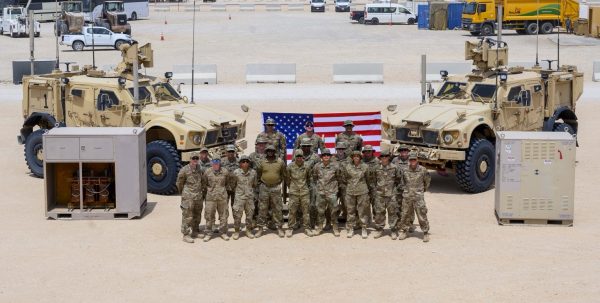
Two years after enlisting, my first deployment in 2014 with the Army and Marines forever changed how I viewed our government. By then the Middle East was already destabilized and our Iraq fight was now with ISIS. Every day we had large scale troop movements passing through the area heading deep into Iraq. One night, one of the teams I deployed with came back from night operations. The pilot radioed in an IFE (In Flight Emergency) and their Osprey aircraft limped to the base. I was one of the people who responded to the call on the airfield. The team faced larger than anticipatedresistance and suffered heavy damage. Three soldiers, all younger than 21-year-old me, died from their wounds. One of them died while I was rendering first aid. The rest of the men had a look in their eye that still haunts me 12 years later.
From that point on, I started asking the question, what the hell are we even doing here? It felt like our help was not desired, and if it was, there must be a better way. I did another two deployments with the Marines and countless short-tour missions during my 13-year career. All the while I prioritized taking care of my people, knowing I couldn’t control our circumstances. Ultimately, my opposition to the direction the military was heading led me to punch out. I became a battle fatigued veteran who was unable to desensitize myself to violence, and I could no longer be a part of a dysfunctional military that has an everchanging mission that directly benefits others more than us.
The origins of the war against Iran run deep
The United States and Iran have been geopolitical rivals for decades, tracing back to two major moments: the 1953 coup and the 1979 Iranian revolution. In 1953, after Iran nationalized their oil industry, the United States and England orchestrated a coup to overthrow the democratically elected Prime Minister Mohammad Mossadegh. They restored the Shah, Mohammad Reza Pahlavi, who was a very close U.S. ally. The 1979 Iranian revolution was the real break. The Shah was overthrown and replaced by the Islamic Republic under Ruhollah Khomeini. This Islamic Republic was deeply anti-American due to U.S. influence and relations with the Shah.
In recent years, tensions have intensified over Iran’s nuclear program, its network of regional allies and its confrontations with U.S. partners in the Middle East. According to the Council on Foreign Relations, concerns over Iran’s nuclear program have intensified as international watchdogs and Western officials continue to warn that Tehran’s uranium enrichment activities could significantly shorten the timeline for developing a nuclear weapon, despite Iran’s insistence that its program is intended for civilian energy purposes. Tensions have also been fueled by Iran’s network of regional allies and proxy groups, including Hezbollah in Lebanon, militias in Iraq and Syria, and the Houthis in Yemen, which U.S. officials and regional governments argue extend Tehran’s military and political influence across the Middle East. Some policymakers argue that Iran’s influence across the Middle East could destabilize the region if left unchecked, while others warn that direct confrontation between the United States and Iran could trigger a broader conflict.
For scholars of international relations, Iraq has become a reference point for how the public evaluates new military interventions. Stephen Walt, a professor of international affairs at Harvard University, has argued in his book “The Hell of Good Intentions: America’s Foreign Policy Elite and the Decline of U.S. Primacy” that the war reshaped public skepticism toward government claims about national security threats.
“The legacy of Iraq is caution,” Walt said in his book about the long-term impact of the conflict. “People are far less willing to assume that warnings about future threats automatically justify military action. “It’s not about political parties. This is psychological warfare directed the American people.
The comparison between Iraq and Iran does not mean the two situations are identical. Iraq under Hussein and modern Iran are different governments with different capabilities and geopolitical roles. Supporters of stronger military action toward Iran argue that the comparison to Iraq is misleading. They point to Iran’s ballistic missile development, its regional alliances with armed groups like Hezbollah and the Houthis, and its increased enrichment of uranium past the levels necessary for nuclear energy as evidence that the country poses an ongoing strategic challenge. Behnam Ben Taleblu, a senior fellow at the Foundation for Defense of Democracies who studies Iranian security policy, has argued that Iran’s regional strategy presents a real challenge to U.S. interests and its allies. “Iran’s network of proxies and its missile capabilities are already reshaping the Middle East,” Taleblu said about the country’s strategic posture.
The similarity lies not in the countries themselves but in the way the case for military action is often framed. In both cases, public debate has focused on intelligence assessments about potential threats, and the argument that early action could prevent a larger crisis. That reasoning, sometimes described as preventive war doctrine, relies heavily on intelligence projections that can be difficult for the public to independently verify.
.
The burden of responsibility for the U.S. involvement in the Middle East is shared across political parties, and each administration must be held accountable for the part they’ve played. According to the Council on Foreign Relations, U.S. and Iran tensions have evolved through decades of policy decisions made by leaders from across the political spectrum. In that sense, the debate over Iran is not simply about one president or one administration. The conflict does not belong to a single political party. It is easy to associate the Iraq War with President George W. Bush or to link more recent confrontations with Iran to President Donald Trump. But the strategic rivalry between the United States and Iran stretches across decades and multiple administrations. Sanctions, diplomatic confrontations and military tensions involving Iran have continued under presidents from both parties, including George H.W. Bush, Bill Clinton, Barack Obama, Donald Trump and Joe Biden. It reflects deeper strategic questions about the role of the United States in the Middle East and the use of military force to address perceived threats.
As tensions with Iran continue to evolve, the debate over military action is unfolding in a country that remembers the last time it heard similar warnings. The shared narrative between engaging Iraq andIran cannot be overlooked. Be informed and understand that we have been here before. Sometimes, there is no bigger picture, or 4-D chess being played. As public support continues to decline, false flags, gaslighting, and misinformation campaigns may try to sway opinion regardless of who is in power. Knowledge is power. If we’re not keen on our history, we’re bound to repeat the mistakes of our past.
Taken from the Summer 2026 print issue of Inside Fullerton. Read it here.