Among the many insults slung at musicians, there is perhaps no pejorative as potentially dangerous as the dreaded “industry plant.” It kills an artist’s credibility by claiming a band that presented themselves as independent, secretly had funding from a record label or influential figures in the music industry, and deems that “they’re only in it for the money, man.”
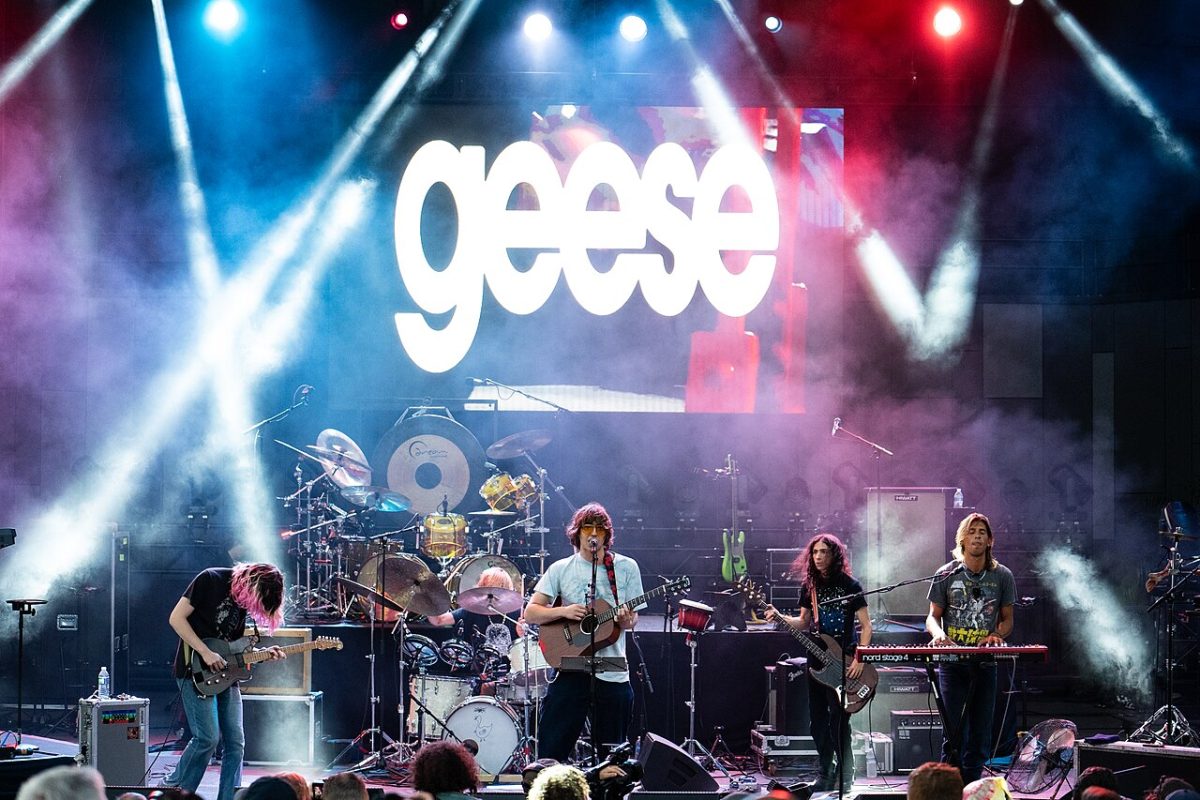
Ever since the New York-based rock group, Geese, saw a meteoric rise to indie superstardom over the past year, their detractors have been tripping over themselves searching for some reason to discredit the group of talented twenty-something musicians. Just go to the comment section of any of their live performances, and you’re bound to find someone sharing a doctoral dissertation about how abominable it is to listen to Cameron Winter’s voice.
And now, the anti-Geese cavalry is making its latest stand after a WIRED article last week, “The Fanfare Around Geese Was Actually a Psyop,” reported that the band and their label, Partisan Records, hired a PR firm to boost the group’s online visibility.
Is this it? The final nail in the coffin that definitively proves they’re a group of talentless hacks who bought their way to the top and deserve the mark of the beast: industry plant? Not by a long shot.
The article reported that Geese hired PR firm, Chaotic Good, to populate videos of performances and interviews to increase the band’s presence in people’s algorithms.
On paper, this comes off as pretty damning, until you remember that every artist, band and performer backed by a record label has a PR team trying to do the same thing.
“The music industry has always manufactured hype. Labels used to buy radio DJs’ steak dinners and cocaine in exchange for spins,” Wren Graves points out in his article for Consequence of Sound. “Before that, they hired girls to scream at Frank Sinatra shows. In the ’90s, street teams posted fliers and handed out cards outside concerts, and if we’re being precise about it, these examples are all much closer to what Chaotic Good does than anything in the WIRED article wants to admit.”
And if this is what Geese’s PR does for them, imagine what the PR team for The Strokes, who have 18 times the amount of Spotify monthly listeners, or Sabrina Carpenter, who has 66 times the monthly listeners, is secretly doing to boost their presence in our algorithms.
There are also actual examples of fraud in the music industry, like in 2024 when musician Michael Smith farmed revenue from Spotify by using artificial intelligence to generate music and created bots to increase his number of streams. This situation is not the same.
So, why do I care so much about this? What about this irks me more than the myriad other industry plant allegations that have been spat at artists?
Because this is getting so, so old.
Look, I get it. Nowadays, with the constant presence of advertisements and the rise of artificial intelligence, finding music, a drawing, or even a single original post on social media feels like a rare breath of fresh air. But I think this skepticism, while well-intentioned, is starting to cannibalize itself.
You can’t go anywhere on the internet without someone trying to convince you that you’re wasting your time on something, and that whatever they’ve been spending their time on did your thing but so much better and way before it was cool.
And, I know, I know—this mountain of anecdotal evidence is overwhelming, and you’re all rushing to buy tickets to the nearest Geese concert. I’m not saying you have to like Geese, or even give them a pass for using an invasive PR strategy, but why are we punishing the little guy? We should be giving credit to those musicians who do reject the commercial music industry and shame the system that forces artists to use such manipulative tactics.
I also think everyone who supports independent music should be celebrating the group of Brooklyn college kids that, not too long ago, were playing cramped black-boxes, are now performing a kick-ass mashup of their song “2122” with Justin Bieber’s “Baby” at Coachella. Isn’t that every up-and-coming rock star’s dream?
They might not be your cup of tea, but anyone can tell these aren’t some random kids who only got famous because their PR team did some aggressive marketing. They also somehow made “Baby” a good song, and we have to at least give them some credit for that.