

Some people say they don’t use AI. They probably just don’t realize it’s open in another tab.
Artificial intelligence is no longer something tech bros argue about on podcasts. It’s in our classrooms, in our group chats, in our late-night Google Docs. It writes essays. It builds resumes. It generates art. It outlines scholarship responses when your brain is fried at 11:47 p.m. For a lot of students, it isn’t optional. It’s a study partner, a planner, a tutor — and sometimes, if we’re honest, a crutch.
And it’s not creeping. It’s everywhere. On TikTok. On Instagram. In Super Bowl commercials. These platforms aren’t just being introduced; they’re being marketed directly to us. The message is subtle but clear: if you’re not using AI, you’re behind. Students are already balancing school, work, sports, applications, internships and a social life that barely fits between deadlines. Now we’re told there’s a tool that can make us faster, sharper and more productive. So, we use it.
The convenience is undeniable. The consequences, however, are less clear. Is AI making students more creative — or quietly replacing the struggle that creativity requires? Is it leveling the playing field, or just shifting it? What even counts as “original work” anymore? And maybe the most uncomfortable question: are we using artificial intelligence to help us think, or are we starting to let it think for us?
To find out, we asked 100 students on campus how often they use AI, what they use it for and whether they believe it’s helping or hurting them. They agreed on one thing: this technology isn’t going away. What they couldn’t agree on is whether it’s empowering students — or slowly weakening them.
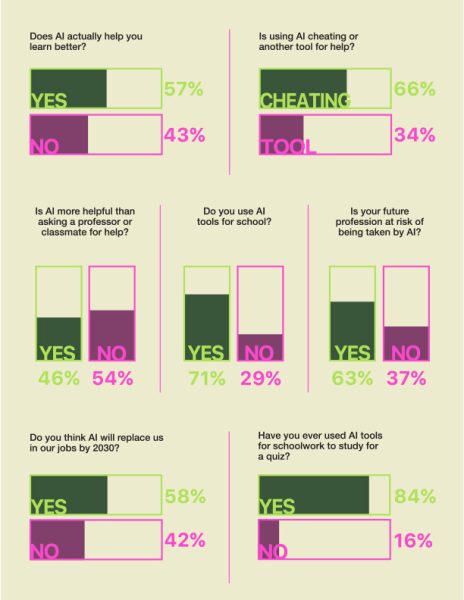
Taken from the Summer 2026 print issue of Inside Fullerton. Read it here.