
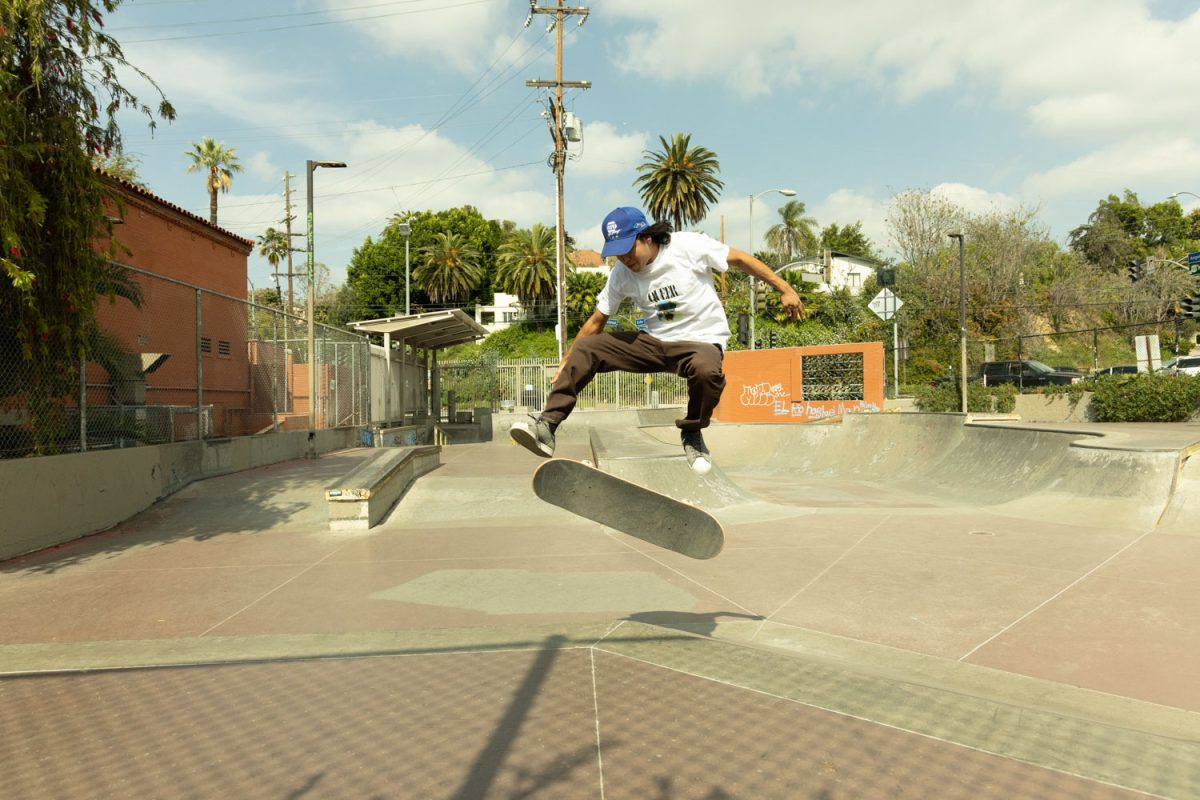
The sound of skateboard wheels rattles across the cracks in the concrete ground of Spring Street, echoing between tall buildings as skaters cut past people and across the city. A few blocks away, outside the Los Angeles Public Library, boards clatter over bumpy streets while buses and cars press on the brake and come to a stop. On any given afternoon in downtown Los Angeles, as skateboarders weave through crowded streets, it’s no surprise to hear the sharp snap of a tail hitting the ground or see a skater take a hard fall face first.
For decades, skateboarding has been more than just a hobby for young teens, but an escape from reality. To outsiders, it might look like a bunch of hooligans being reckless, but to those who skate in DTLA, it’s a way to claim a spot.
Downtown Los Angeles has become an iconic place for street skating on the West Coast. Unlike the smooth parks and beachside sports of Santa Monica or Venice, downtown offers skaters a raw and unpredictable feel. The mix of architecture like wide plazas, stair sets, street slopes and uneven pavements showcases a natural skateboarding environment that can’t be replicated. Areas like Pershing Square and City Hall regularly attract skaters who gather to not just practice their tricks, but film clips and spend time with their friends. These downtown skaters inspire the younger generation with skate videos and are building a community that thrives, even in tension with security guards who try to push skateboarders out of public spaces.
The roots of modern skateboarding culture in downtown trace back decades. By the 1980s and 1990s, skateboarding in downtown Los Angeles started to gain popularity. Skaters like Guy Mariano and Danny Montoya were the first skaters that helped transform skateboarding into an art in the downtown Los Angeles area.
Now, as more of the youth get into the sport, skaters across Southern California from places like Orange and greater Los Angeles County are drawn to downtown. With the rise of social media, skate clips filmed in downtown on recognizable streets can gain thousands of views overnight, turning a local session into a career. Downtown has also served as a place for professional skaters like Louie Lopez, Dashawn Jordan and Kader Sylla to start their careers.
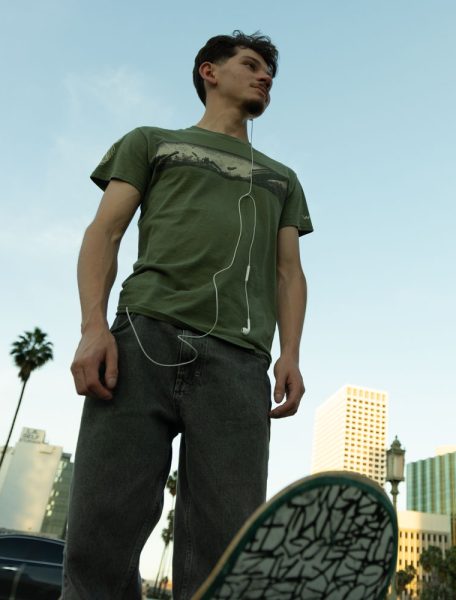
Years ago, skaters would have to wait for skate videos to release on television channels like MTV to see the latest tricks or styles. Today, downtown’s skate culture has grown through social media platforms like TikTok and Instagram, where skaters can share their creativity with a global audience. The sport is not just about landing tricks, but about the community and the expression of people’s styles. One prime example of this is YouTube Channel Network A collaborating with Terry Kennedy and filming him doing tricks around downtown Los Angeles. In one video, near the smooth steps of the Stanley Mosk Courthouse, a skater prepares for his next move by putting his wired earbuds in and playing the next song, as cameras hang from a cameraman’s necks waiting to start videotaping. Within hours those moments can end up gaining thousands of views.
But skateboarding in downtown Los Angeles isn’t always the easiest. At most public spaces, security guards and sometimes police try to move skaters away from popular locations. “I feel police and security are always cracking down on people skating and are ready to kick you out, like Pershing Square, and it’s been kind of a bummer,” says Lincoln Gonzalez, a skater from Carson who frequently comes to downtown.
Many plazas and ledges have been redesigned or filled with metal to prevent grinding tricks. At places like Pershing Square or Grand Park, metal brackets now line the edges of marble ledges and small bumps have been installed along stairs to make tricks more difficult. While these can frustrate skaters, city officials point to safety concerns. In busy areas like DTLA, skateboarding can also be harmful at times. When skaters are attempting tricks or moving at high speeds, they pose the risk of potentially colliding with people while possibly injuring themselves and others. There are concerns about traffic hazards, when skaters are navigating alongside cars and buses during traffic hour, this can cause a risk due to being less visible and in drivers blind spots. The constant moving from one place to another has become a regular part downtown these days where skaters like Gonzalez continue to adapt. He says he moves from spot to spot when one gets blocked.
For skaters who travel to downtown, the hobby goes beyond tricks and offers a sense of freedom. Alex Salome, a skater from Lake Forest, explains what skating means to him. “For me it’s kind of like reading a book, just focused on skating,” he says. Gonzalez from Carson says, “Skateboarding is like an outlet. When I have some free time, I love to skateboard, it’s freeing, I can go as fast as I want and do any trick. Skating has never felt like a job or chore to do.” As skaters enter the city, they can ride their boards and enjoy a laugh while disconnecting from their outside life. From a valet worker in school to even professionals, it’s common to see people from different backgrounds skating together.
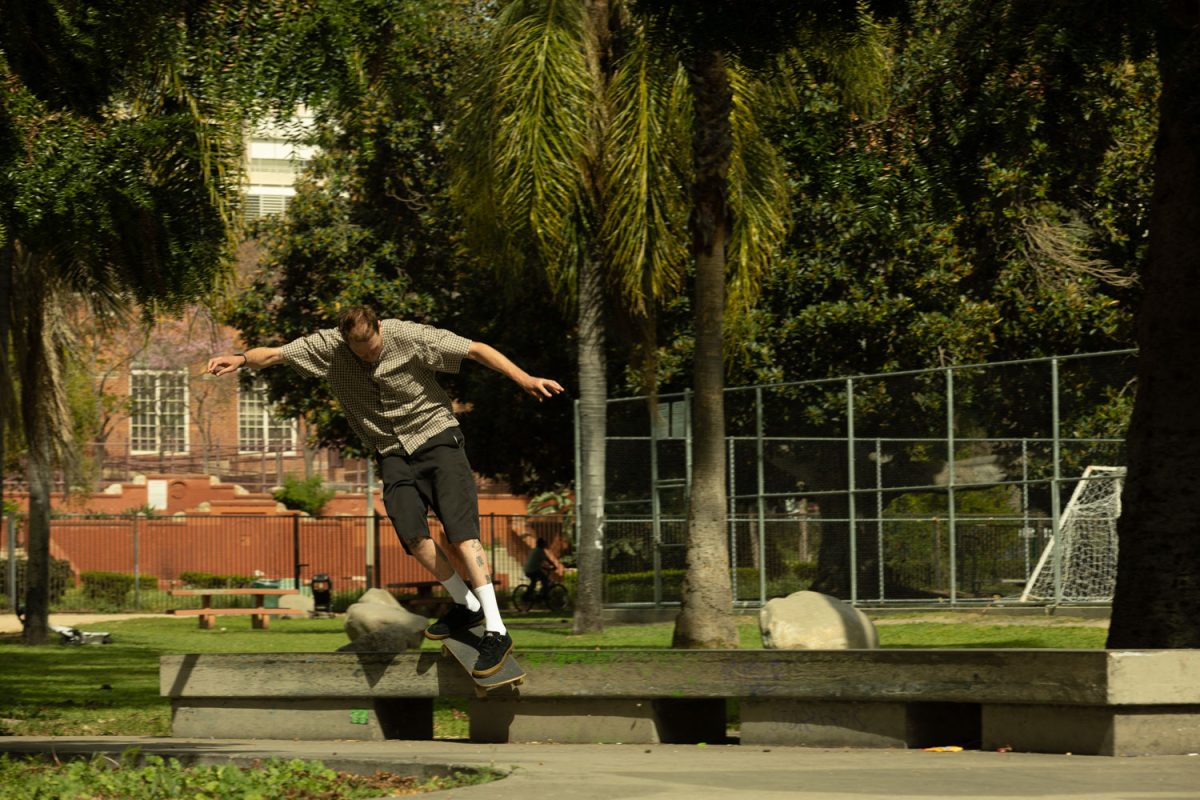
Despite its growing popularity, skateboarding still holds onto its underground identity. Unlike school or organized sports with rules and schedules, skateboarding allows individuals to create their own style, from riding regular or goofy on your board to the type of clothing and accessories you show off. Salome, for example, has been buying blank decks and printing his own graphics on them for the past two years. Jonah Delgado, a skater from Whittier, says that the popular game Stake influenced his love for skating and inspired his style, from the different types of boards to the baggy clothing accessible in game.
While Delgado says that the skate scene in downtown can feel “chaotic” at times, Gonzalez adds that “it’s always a fun time.” “There are lots of things and places to go to,” he says. “I love it out here.”
Taken from the Summer 2026 print issue of Inside Fullerton. Read it here.