
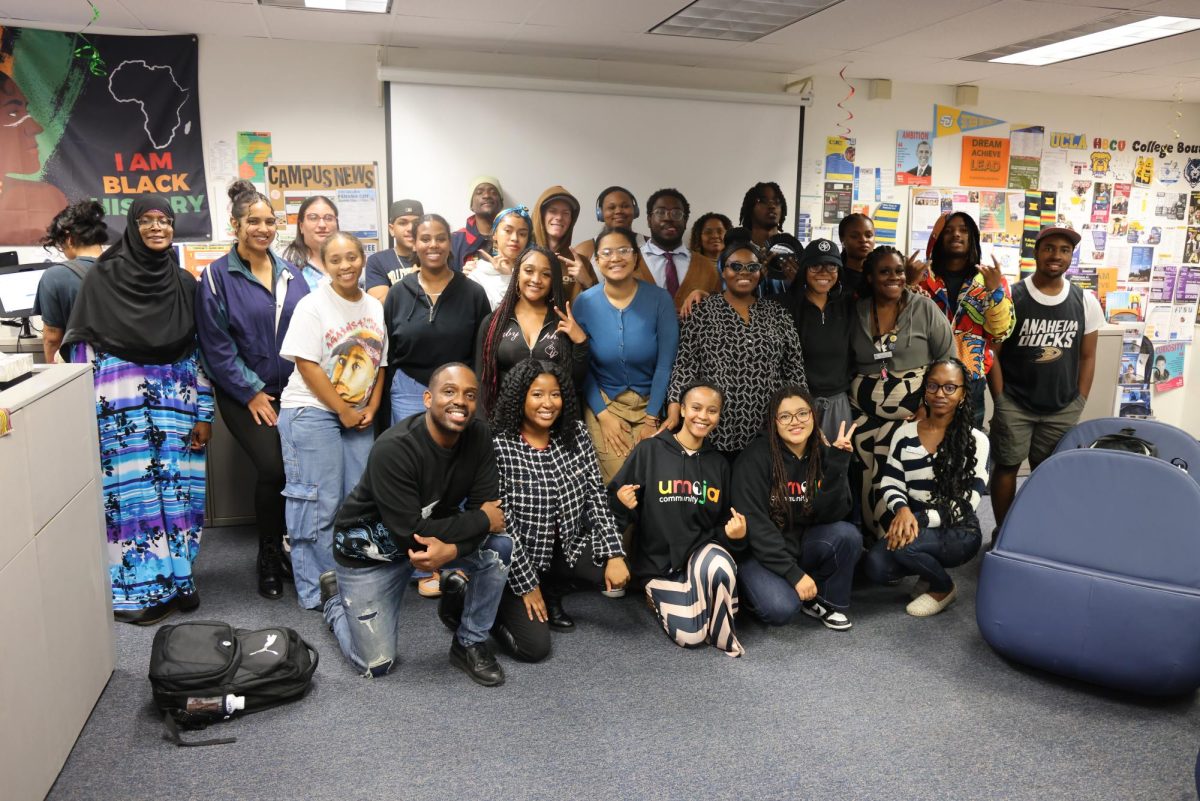
The Umoja program at Fullerton College has seen growth in enrollment in the past year. Student enrollment in the program has increased by 123%, from 108 students in 2023-2024 to 241 in 2024-2025. In the past 10 years, the average number of enrolled students fluctuated between 50 and 100.
According to the Umoja Program’s Co-Coordinator, Jewell Taylor, the program used to have a firm application deadline, which prevented students who discovered the program late from joining until the following semester. In Fall 2024, they removed the barrier by offering year-round application intake.
“We enhanced our outreach efforts, contacting new admitted Fullerton College students directly and personally inviting them to join Umoja,” said Taylor.
Umoja is dedicated to promoting African American culture and academic success. The program was founded in 2006 and was formed to empower Black students and help them succeed. In 2008, the California Community Colleges Board of Governors recognized Umoja as a statewide success program.
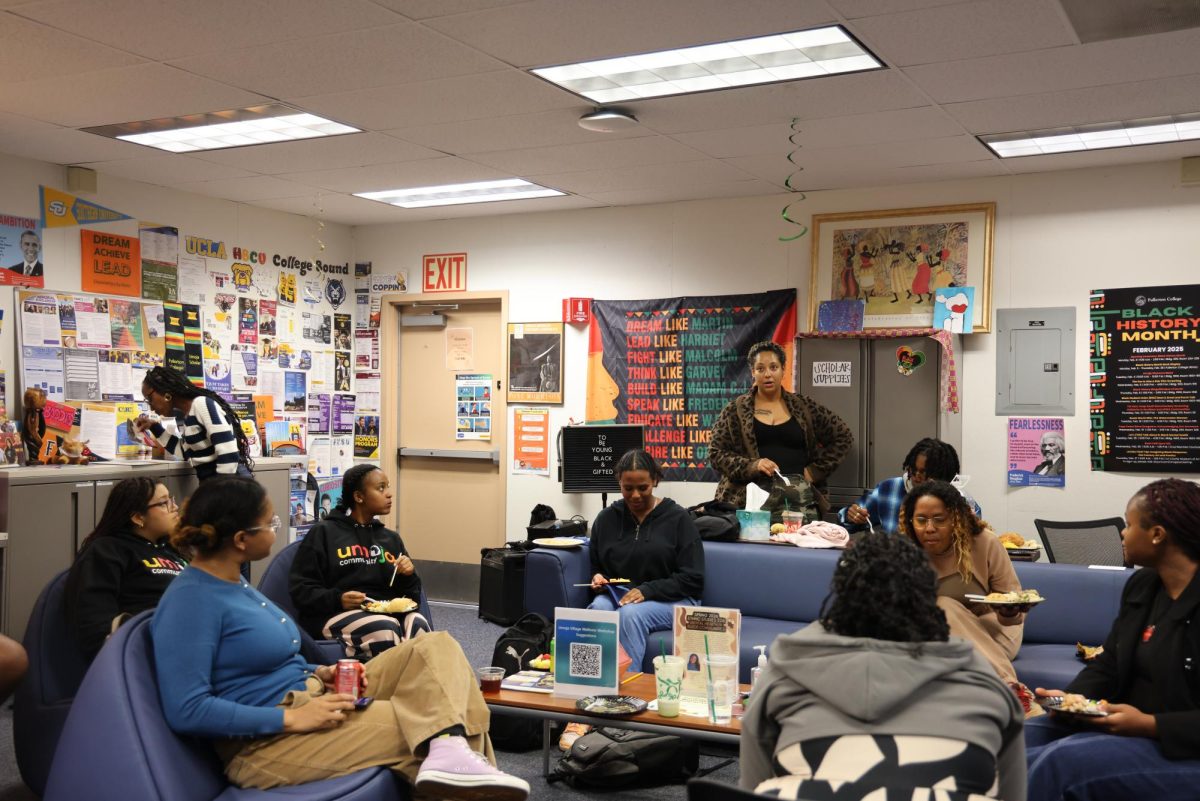
The Umoja program offers many benefits to the students, including monthly workshops and culturally relevant events, academic counseling, personal therapy, a dedicated lounge with free snacks, textbook and book store vouchers, college tours, cultural excursions and access to a computer lab with free printing.
African American history is already part of the college curriculum; however, since the emergence of Umoja, Black students are now offered more classes that are geared toward teaching Black studies.
Umoja Scholars offers Umoja-specific English courses with embedded tutoring and counseling courses.
“I am getting a lot of help from Umoja tutors who help me with my essay,” said Krista Kantone, a Criminal Justice major.
The Umoja Program at Fullerton College is overseen by the Umoja Community Education Foundation, which provides programmatic funding based on student enrollment and engagement.
“With the increase in enrollment, so does the budget,” said Talyor.
UCEF oversees more than 70 Umoja programs across California and Washington and offers access to conferences, trainings, mentorship, scholarships, and international learning experiences.
Programs like Umoja provide a peaceful space for Black students to connect and get an understanding of who they are culturally. Being connected to your identity is an important component to Black students’ success, said Taylor.
“The access to resources has been instrumental in my success, and without this program, I would have almost dropped out,” said Arthur.
According to the Office of Institutional Effectiveness, there has been a slight increase in the Black and African American student population. From the years 2023-2024 to 2024 -2025, the overall student population has grown by 7% while the African American population grew by 11.5%, according to the California Community Colleges Datamart. However, current data does not indicate that this increase is solely attributed to the Umoja program.
Umoja stands alone as the only Black program being offered on campus.
“Joining Umoja has helped me find my place on campus and decide my major. It also helps me visualize my career and forge friendships with a wide variety of individuals,” remarked Amatullah Arthur, who is majoring in Africana studies.
The Umoja program continues to rise and is making a positive impact on not only Black students but also on students who don’t identify themselves as Black.
“Umoja has impacted me as a space, I’ve felt comfortable in ways such as there are always resources here such as food for when I’m hungry and also I get to talk with other Umoja scholars whether its help with my classes, planning my future or just having a person to talk to when I’m going through something in life,” said Damien “Dae Dae” Passeri, a Kinesiology major who identifies as Hispanic.
Although Taylor is relatively new at her position and has only worked for two years at Umoja. She is very pleased with how things are going with the Umoja program.
“While the program centers around the lived experiences and cultural heritage of the African and African diaspora, it remains fully inclusive to anyone interested in participating,” said Taylor.
