
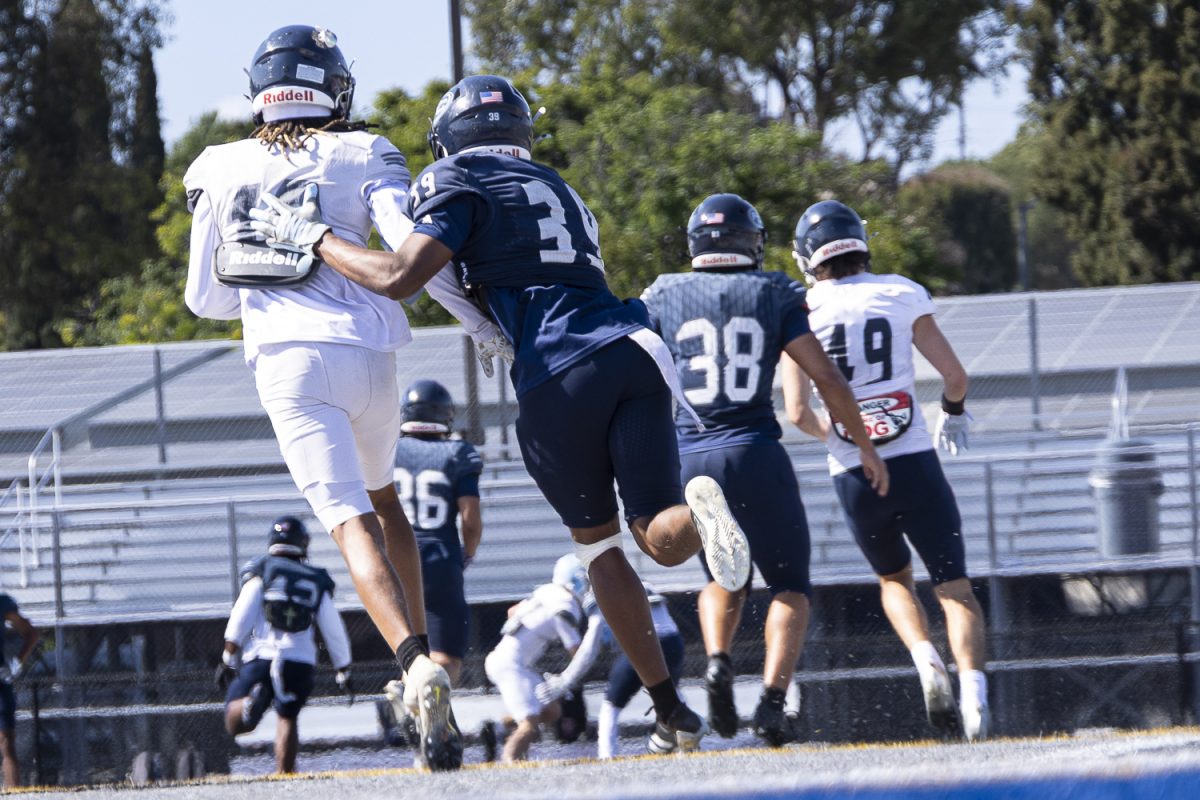
Hornets have suited up and gotten their off-season football workouts in full swing. For the freshman players who are returning for the 2026 regular season, it starts now.
The last time players Harlem Harris, Johnny Ingram, Luke Indorf, and Kokaliopasi Kinikini played a meaningful game was against Riverside Community College in a bowl game, where they thrashed their opponents 45-30.
Instead of preparing to compete against different schools, players are competing against each other. Typically, during spring training workouts, players can expect to watch practice films with the team before going on the field and after practice as well, through their huddle account.
Returning players must participate in spring workout drills. For the third year, players can join in on team practices by choice. Some drills players do include pass protection, inside runs, passing routes for offense and defense, 7-on-7, and 11-on-11 team drills.
“This off-season the team’s main focus is getting bigger, stronger, faster, and getting ready for the season,” says Defensive Coordinator and Co-Head Coach Brian Crooks.
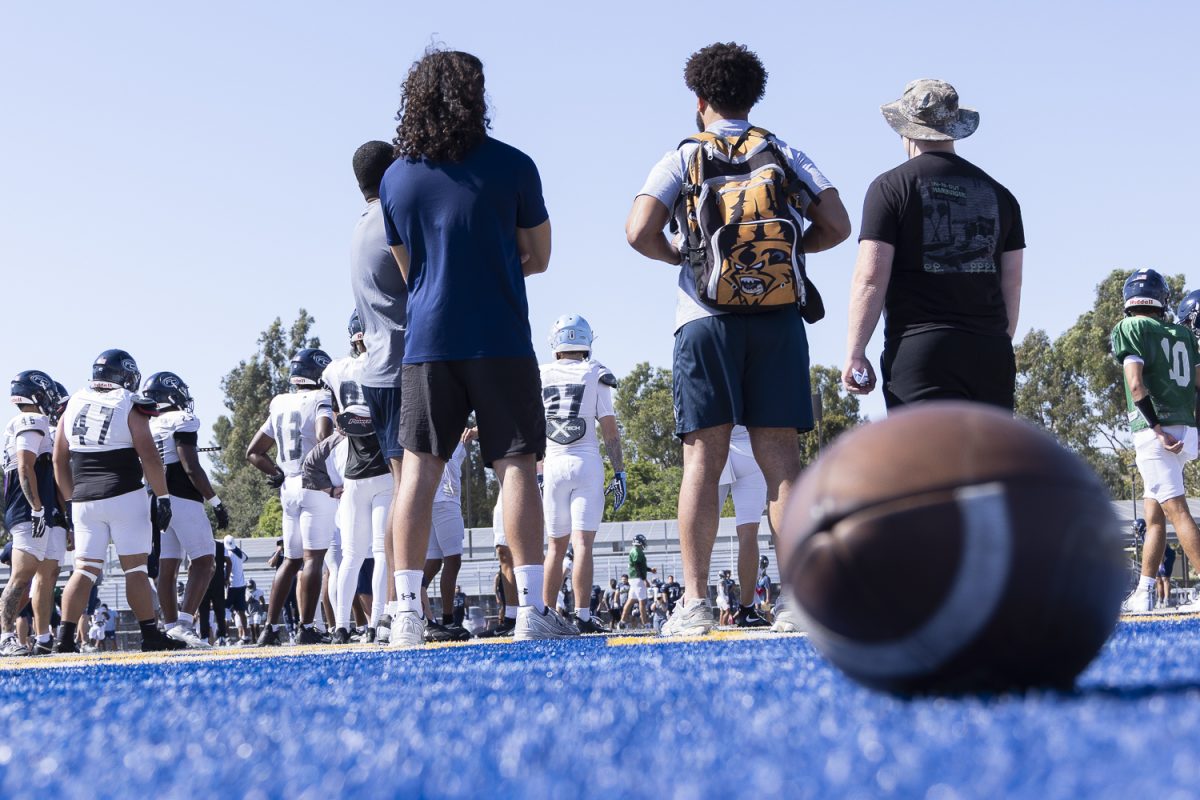
While some players look to improve from last season, sophomore slot receiver/running back and kick returner Harlem Harris is using the spring practice sessions to hone in on becoming a better all-around offensive player.
“Focus on being calm and more consistent with my route running, catching and becoming a more mature route runner and not be as selfish in my route running,” Harris said.
Meanwhile, on the defensive side of the ball, two key Hornet players are back at full strength and glad to rejoin the squad after they suffered injuries. Since his return to the team, sophomore Linebacker Caleb Collins took time to reflect on his injury that set him back.
“Getting hurt slowed down my recruiting, and I couldn’t compete with my team. And basically, I didn’t get to complete the goals that I set out for myself that year,” says Collins.
Sophomore Amir Gearrison’s goals for the offseason are to improve on his work ethic, techniques, and leadership.
Not only does spring training benefit returning players, but it also helps third-year players. Once they use up their eligibility and can’t earn themselves a scholarship at a four-year university, they must be a part of the spring training workouts.
This allows them to showcase their talent and compile game-film highlights they could submit to scouts at power-five schools, like the Southeastern Conference (SEC) and the Big Ten Conference. Plus, they can send film to Division 2 and Division 3 colleges, as well as NAIA schools.
“Number one, it brings back my confidence, which is being around football in general, and spring football enhances my work ethic, and it helps me speed up my recovery,” said former Running Back GJ Kelly.
Kelly received an offer from Colorado Mesa University on May 19 to play football for the Fall of 2027.
Springing training may not mean a lot to the average football fan; however, players understand that working hard in the offseason is necessary. Without participating in spring training workout drills, some players won’t improve their game. Even for third-year players, taking part in the FC offseason can be helpful.
“All the little details of techniques need to be fixed right now,” said coach David Preito.
Whether improving on speed, strength, techniques, or getting game film, coaches can agree that the majority of players need to participate in spring training workouts. In the long run, it can benefit both the players and the team.