
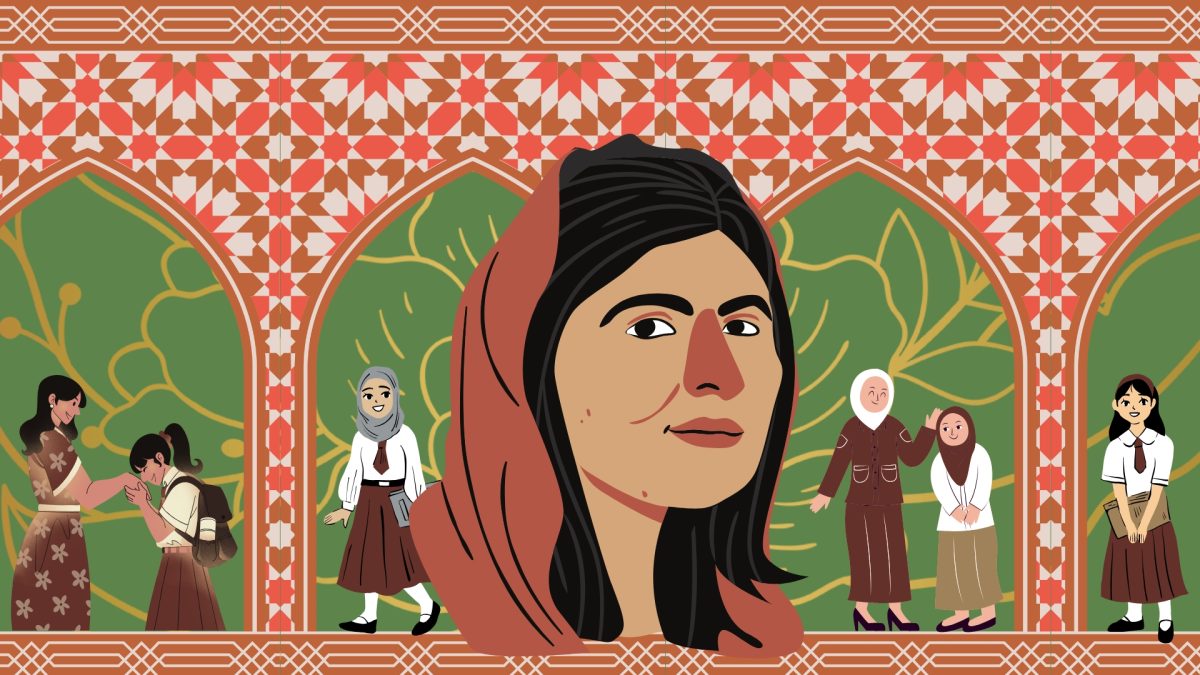
Nobel Peace Prize laureate and education activist, Malala Yousafzai, reflected on her transition from global advocate to college student while discussing her newest memoir, “Finding My Way,” at a webinar hosted by Brandon Adler on Wednesday.
Yousafzai, who survived an attack by the Taliban at 15 years old for speaking out in favor of girls’ education, wanted to ensure her years spent at Oxford University were indicative of her true self after living such a serious life in Pakistan.
After years of interviews, speeches and international travel, she was eager to experience the small, ordinary joys she once feared she might never have.
“I realized, there are cooler students who get into adventurous experiences like climbing the college rooftop to make it up to the bell tower. You sneak out of this tiny window, you walk on a narrow path along the roof, you jump across to another roof,” said Yousafzai. “You are risking your life. I was willing to do that because I wanted to have this experience of disobedience and I wanted to be this rebellious person and I was feeling such joy.”
Yousafzai said she would’ve done anything to blend in and feel like her trauma didn’t define her. She was determined to reclaim the experiences she had been deprived of while growing up in the public eye and yearned for the comfort of being herself without the need to live up to any expectations.
“I received angry phone calls from my parents due to the backlash of the outfit I was wearing. People were criticizing me for wearing non-traditional clothing. The criticism came from the fact that the attire was against religion and against my culture,” said Yousafzai.” I wanted to blend in and be like every other student. I knew that students wore jeans and jumpers or sweaters and hoodies. I knew that if I wore my traditional Pakistani clothes, I would stand out.”
In 2021, Malala was photographed on campus, and her picture was uploaded on social media. She was wearing skinny jeans, a bomber jacket and her headscarf. From the viral photo sprung a hate train led by the hashtag “Shame on Malala”.
She said she understood that her experience was so limited that she could not pass up the opportunity to be among people her age. She found herself frequently demanding she “close the book and go hang out with her friends,” but prioritizing social life over studying was a foreign concept to her.
It wasn’t until she nearly failed her first year exams that her tutor finally advised her to prioritize her studies and find a healthy balance.
Yousafzai said that she had begun to experience symptoms of post-traumatic stress disorder that she had long denied. One of the first times she experienced the symptoms was when she was smoking cannabis with her friends and got vivid flashbacks of the 2012 attack that nearly took her life.
“I had tried to suppress those memories, but I had seen the Taliban attack when I thought it was something I had forgotten and moved past. It changed my life forever because I started getting panic attacks after that. I was experiencing anxiety and PTSD,” she said.
According to Yousafzai, her friends noticed the change in her demeanor. They encouraged her to seek therapy and even organized sleepovers to make sure she was not alone.
“I remember the therapist asking me a question like, ‘How are you feeling today?’” she said. “And I was like, really? I rolled my eyes. To think a question like that could help with my pain!”
Over time, however, therapy became a turning point in her recovery. Yousafzai said she learned to prioritize mental health and self-care. This shift not only helped her cope with trauma but also strengthened her tenacity as an activist.
Through “Finding My Way,” Yousafzai said she hopes to remind others that even those who fight for change must make space for healing. She said her story is not only about survival, but about reclaiming humanity after years of being defined by horrific tragedy.
“I now take breaks. I try to go and read in some fresh air, I go for a walk sometimes, I run, or go to the gym. All of these things are helpful for me to prevent getting more anxiety and feeling overwhelmed. I initially used to think that these were extra things I was bringing to my life, but now I see them as part of my activist life. I know that I can be a better activist when I look after myself,” said Yousafzai.
