The Lunar New Year this spring will create Fullerton College’s first five-day February weekend outside scheduled recess periods. The calendar change follows recent statewide legislation allowing community college districts to recognize the Lunar New Year as an academic holiday. It reflects broader efforts to expand cultural recognition and student support on campuses.
The new schedule will place the Lunar New Year holiday alongside Lincoln’s Birthday and Presidents’ Day, creating a continuous closure from Friday through Tuesday when combined with the weekend. The holiday has been formally recognized at the college since the 2023-2024 school year.
Fullerton College President Dr. Cynthia Olivo said the decision reflects both statewide policy changes and the college’s responsibility to serve and recognize its student population.
“The state gave districts the option to observe Lunar New Year so that we can honor the family traditions that many of our colleagues and students celebrate,” Olivo said. “Our district chose to do the most inclusive thing by taking the day off and honoring the customs of a population that we have celebrated.”
Assembly Bill 264 allows community college districts to observe Lunar New Year by substituting or incorporating the holiday into the academic calendar while maintaining required instructional hours. According to Olivo, the district elected to add the holiday as an administrative closure while still meeting the 54 hours of instruction requirement per 3-unit class.
“We’re still able to fulfill the number of instructional hours we have to in order for students to be awarded units,” Olivo said. “It’s a matter of how we spread out those calendar days.”
The addition of the holiday follows several recent initiatives connected to Asian Pacific Islander Desi American student support at Fullerton College. Since 2023, the college has expanded Lunar New Year observation and established an APIDA Center in Building 100, Room 121, after receiving federal grant funding, creating dedicated space and staffing focused on community and student engagement.
Olivo said increased awareness of the college’s APIDA student population contributed to the decision to formally recognize the holiday.
“There’s been a heightened awareness that our district serves a significant number of Asian Pacific Islander and Desi American students, and now we’re doing something about it,” Olivo said. “It’s part of our obligation and responsibility to a community that we value.”
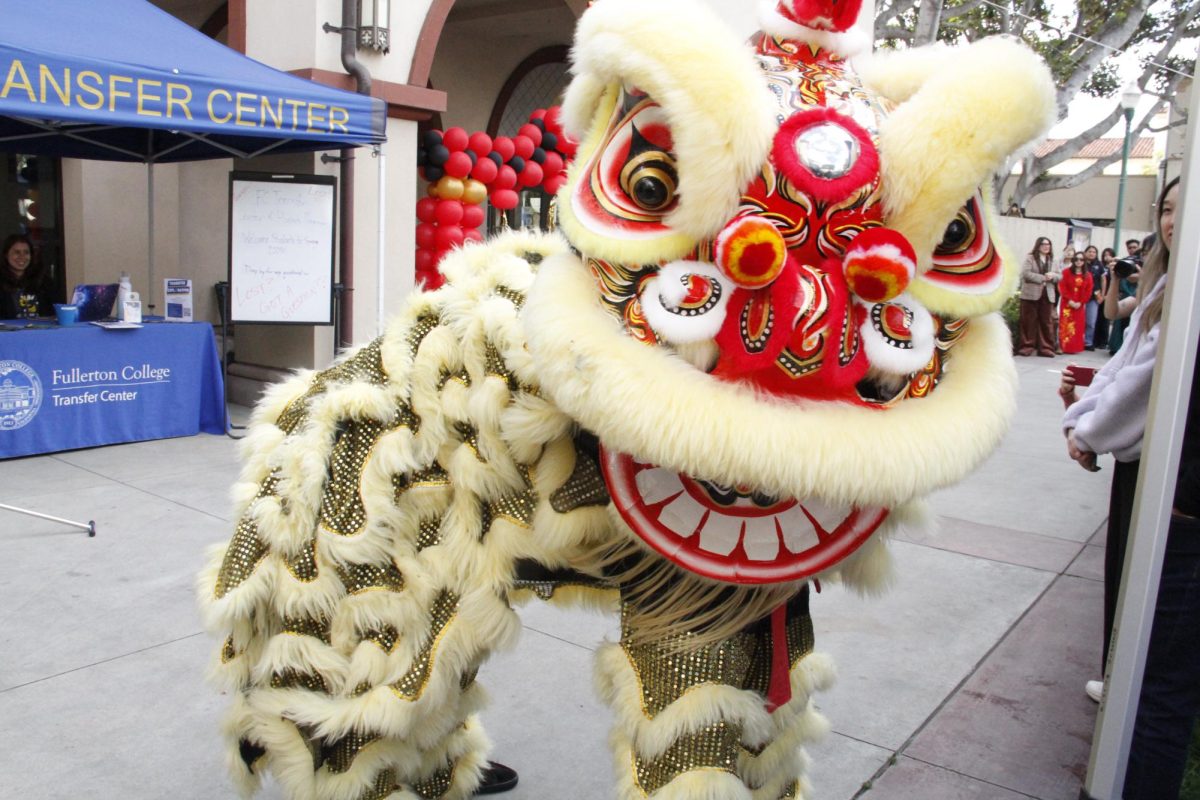
Vice President of Administrative Services Henry Hua participated in a districtwide Lunar New Year celebration, led by the Faculty and Staff Association, bringing together faculty and staff from Fullerton College, Cypress College, North Orange Continuing Education, and district offices.
“It was a wonderful cultural celebration and helped bring our teams together,” Hua said.
The event highlighted the collaboration efforts across campuses and reinforced the district’s commitment to recognizing and honoring the diverse communities it serves.
The official holiday will coincide with APIDA events on campus, including the APIDA Lunar New Year Celebration scheduled on February 18th. The event will include cultural activities and educational programming intended to promote cultural understanding and bring students together in celebration.
Olivo connected the importance of cultural recognition to student support through a recent experience on campus. During the first week of classes, she encountered a student who had been in distress and helped connect him with student services such as the APIDA Center.
When she later saw the student again, he shared that he had found community through the center and now visits regularly. Olivo described the moment as an example of why cultural spaces are important, noting that students often succeed when they feel they have a place where they belong and people who understand their experiences.
According to Olivo, cultural centers and recognition of cultural observances contribute directly to student success by helping students feel supported and understood while navigating their academic experience.
“That’s exactly why we need these kinds of spaces — so that our students find community and find a place where they feel like they belong. They know they belong, and it helps with student success,” Olivo said. “That’s what we hope for when we create cultural centers on campus.”
*A correction was made to the headline and body of this article. A previous version claimed this was the first time the college had observed the Lunar New Year as a formal holiday; the school has celebrated the holiday since 2023 and has observed it on the school calendar since the 2023-24 school year.*