At two years old, comedian Nina G would make unusual noises when she wanted specific foods. She would make a chirping noise for chicken and a kissing-teeth sound for cheese. It took her until she was eight years old to find out she had dyslexia.
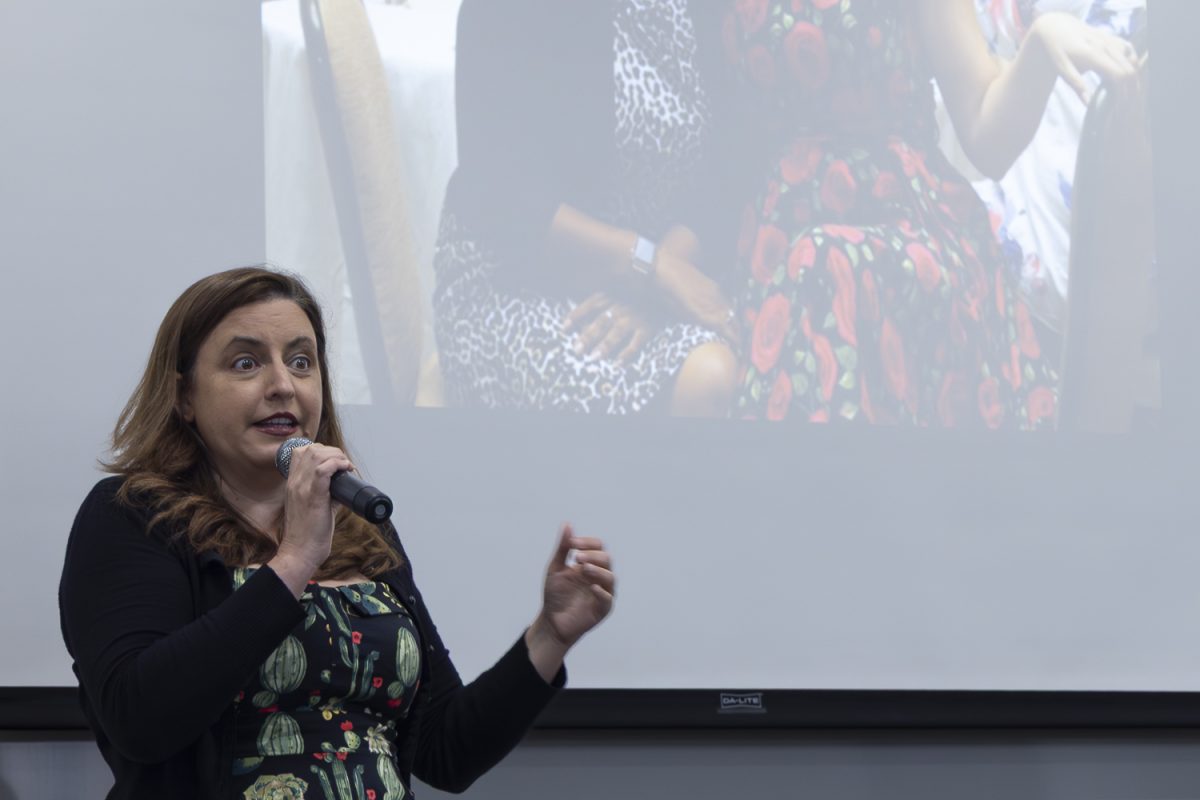
In an author talk hosted by the professional learning office on April 16 in the humanities building, comedian and author Nina G described juggling her dyslexia and stuttering as a comedian while advocating for others with disabilities.
She recalled the way she would set up her tea parties as a child, and how that foreshadowed her organizing issues and was an early sign of her dyslexia. She also occasionally has a hard time understanding people. When adults talked to her, she said it reminded her of the sounds the adults in the Peanuts cartoon would make.
In her talk, Nina G outlined a theory by Southern California psychologist Joseph Sheehan, in which he compares stuttering to an iceberg.
“You see us trying to get the words out, but underneath the water are the kinds of feelings that are associated with the stuttering,” she said. “Denial, shame, guilt, anxiety, fear, hopelessness, and isolation.”
She wanted to become a full-time comedian. When comedians made jokes, something sparked within her.
Booking a stage felt impossible for Nina G. Most venues didn’t hire comedians with speech impediments or disabilities. She described the process as very isolating.
“Back in 1989, before the internet, I couldn’t type up the stand-up comics stuttering, so I didn’t know what was out there,” she said.
She said having teachers who pointed out that she was smart was one of the key ways she gained self-confidence and increased her independence. She had many people in her life cheering her on for wanting to pursue a career as an activist and a stand-up comedian. Her former teacher, Ms. Bramlet, who lives in South Los Angeles, showed up for Nina G’s first comedy stand-up, and Nina G dedicated the show to her.
When she was 35, she attended a conference for people who stutter. She recounted seeing a group of people from the conference going out for food. All of them thought it was funny that the cashier had to hear people stuttering through their orders.
“It was just a line of stuttering orders,” said Nina G.
Nowadays, Nina G is focusing on bringing awareness about stuttering and creating a safe space to self-advocate and to just be themselves.
“We talk a lot about the students who need to advocate, but we also need to make it so the environment can hear that advocacy, so it goes both ways there, and that’s why it’s so important to help people to develop those advocacy skills,” said Nina G.