
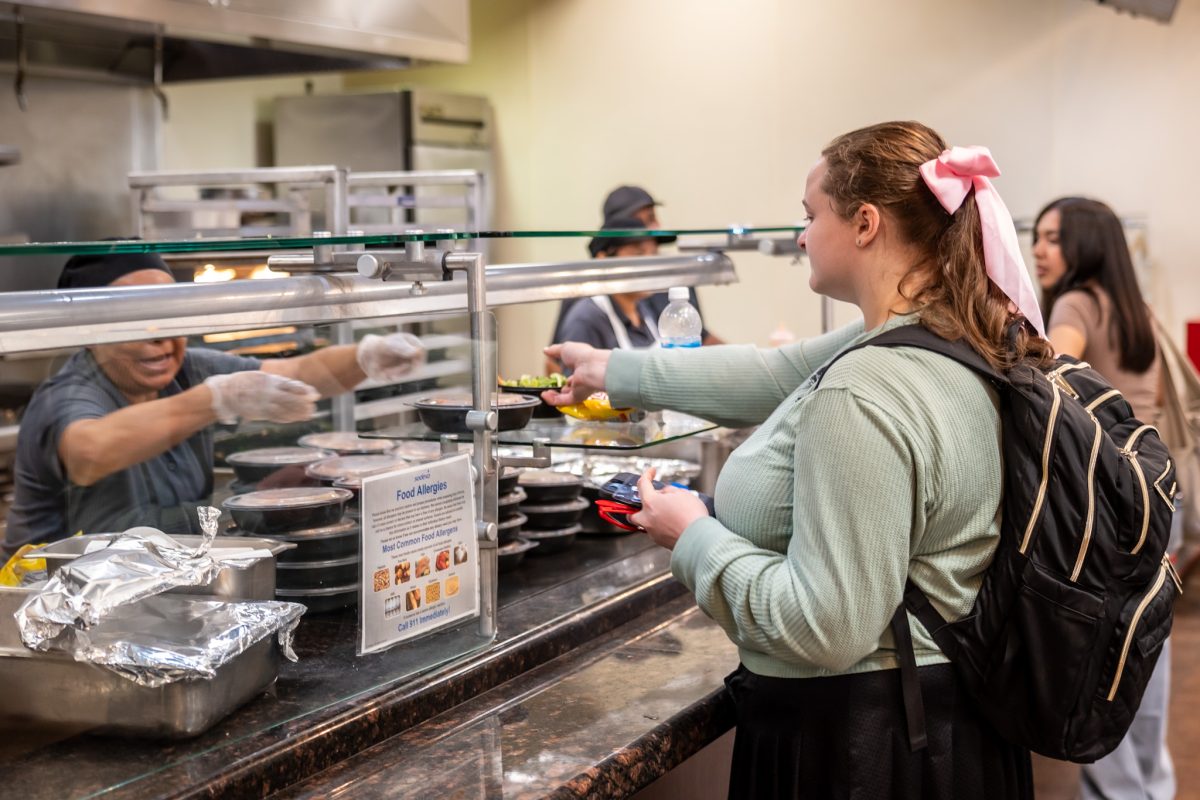
At a recent Associated Students meeting, Vice President of Activities Brenda Perez outlined growing dissatisfaction with Sodexo, the campus food service provider. The company is in its eighth year of contract with Fullerton College.
The presentation centered on a mounting concern shared by students and staff. While basic food needs are being met on campus, many students feel the system does not adequately support nutritional well-being, dietary restrictions, or overall food quality, according to the presentation.
Perez described a pattern of complaints about a menu heavily reliant on fried, processed, and repetitive options, such as pizza, fried chicken sandwiches, and simple wraps that often lack sufficient protein or nutritional balance. Students with dietary needs, in particular, are reportedly left with limited or inadequate choices.
“It’s simply not food students should be relying on every day,” Perez noted. She emphasized that those meals represent their primary source of daily nutrition for some students.
Beyond food quality, the presentation also raised financial concerns. Perez highlighted the significantly inflated prices under Sodexo, along with limited flexibility for student organizations trying to provide food at campus events. In some cases, Perez found that working with alternative local vendors could serve more students at a lower cost, even after accounting for logistical challenges.
However, the discussion also acknowledged trade-offs. Faculty and staff noted that Sodexo provides convenience-handling delivery, setup, and equipment, which smaller or independent vendors may not be able to match without additional effort, time, or cost. There were also concerns raised that shifting away from Sodexo could impact cafeteria workers, many of whom could face job instability or loss if the contract is not renewed.
A.S. members outlined three possible paths to go forward with:
- Requesting that the district not automatically renew its contract with Sodexo.
- Including students directly in the rebid process for a future food services contract.
- Launching an immediate campus-wide food survey and listening process to assess student needs.
The possibility of switching to independent food chains or local vendors was also discussed as an alternative model that could improve food quality and affordability. Perez argues this shift could bring fresher, more culturally relevant food options to campus. Still, it raises questions about consistency, convenience, and the long-term employment of current food service staff.
Perez emphasized that the conversation is still in its early stages. Any future decision would require district approval and a formal bidding process, which typically prioritizes cost but now faces increased pressure to consider student experience, nutrition, and equity.
Many students on campus echoed similar frustrations outlined in the presentation, pointing to a lack of variety and limited healthy options.
Comments ranged from mild dissatisfaction to outright frustration, with students wishing that they had a variety of food options and one explaining that they are “forced to leave campus and spend 10+ dollars,” claiming that the Healthy Hornet meals weren’t very healthy and kept them from reaching their goals.
“I always appreciate it when a student takes time and utilizes a classroom project to explore concerns students have, and this one involves cafeteria services,” said FC President Cynthia Olivo. “The discussion can lead to documenting the scope of work we will be seeking as we engage in the next contracting process for cafeteria, catering, beverage and food vending services on campus.”
Olivo also explained that she has asked the shared governance committee, the Planning and Budget Steering Committee, to explore the matter from a resource perspective. They are relying on shared governance to provide further insight, helping ensure that all voices, including students, faculty, classified professionals, and administrators, are heard.
“The discussion can lead to documenting the scope of work we will be seeking as we engage in the next contracting process for cafeteria, catering, beverage and food vending services on campus,” she said. “A reality we face in this process is that the college gains funding from this contract in that portions of the revenue are invested back into the college.”
The Hornet reached out to the General Manager of the Sodexo-Fullerton College partnership, Eddie Correa, but he did not respond.
The presentation has opened a broader campus debate: whether convenience and cost savings should continue to outweigh food quality, student health needs, and worker stability, or whether it’s time for a structural change in how campus handling is handled altogether.